
Loading...
Serving Hammond, IN and surrounding areas. (219) 666-0040
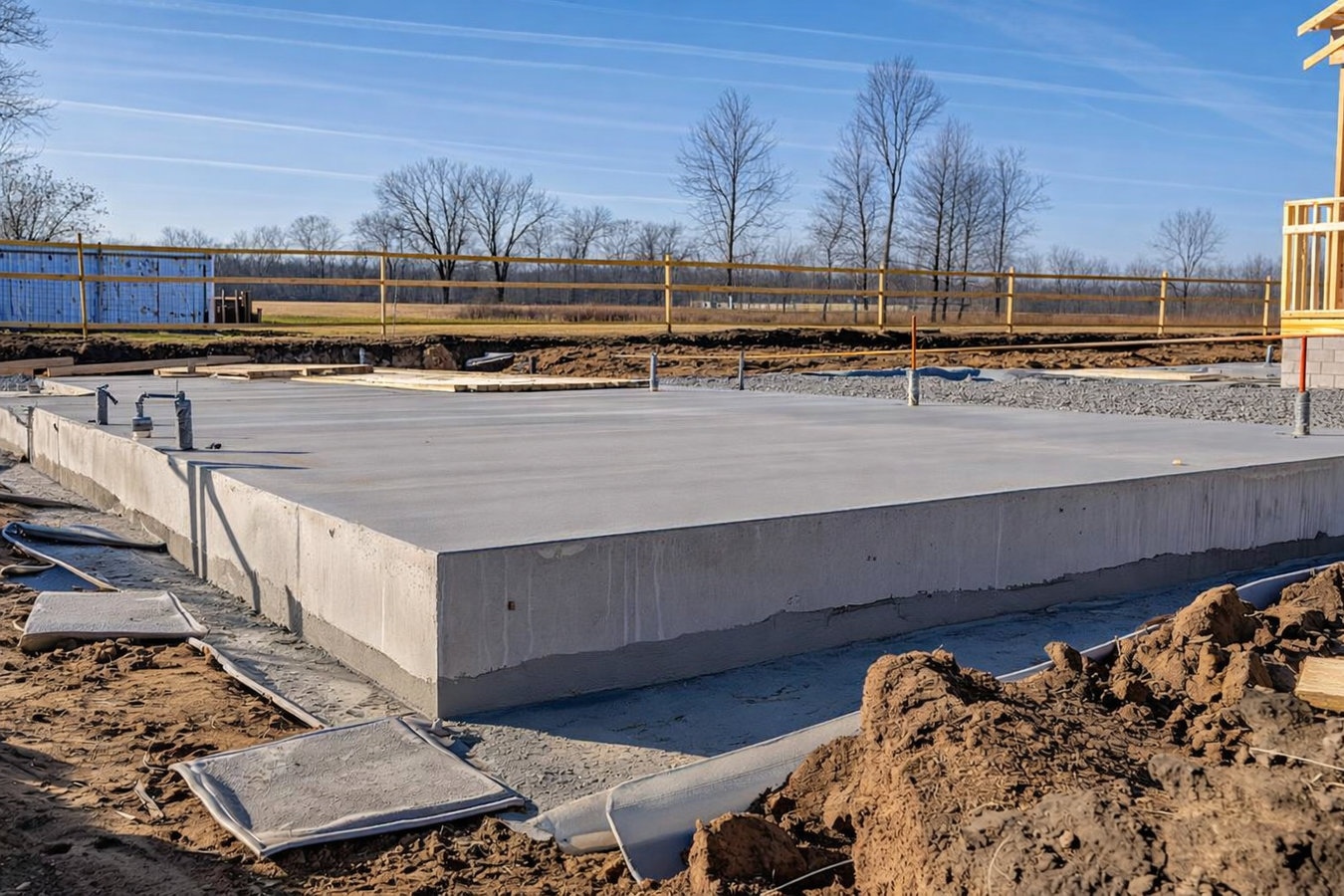
Hammond winters freeze deep, and clay soil pushes hard on anything sitting in it. We install foundations built for those conditions - dug to the right depth, drained properly, and permitted from day one.
Foundation installation in Hammond covers the full process of building a new structural base for a home or addition - from excavation and gravel prep through the concrete pour, waterproofing, and backfill - with most single-family projects taking one to two weeks from the first dig to a frame-ready foundation.
A foundation is the part of your home that carries the weight of everything above it - walls, floors, roof, and everything inside. When it fails, the whole structure suffers. Hammond homeowners have particular reason to pay attention to foundation quality because the local clay soil, freeze-thaw cycles, and proximity to Lake Michigan create conditions that stress foundations harder than most parts of Indiana. If you are adding a new structure rather than a full foundation, a slab foundation build may be the right scope for your project.
For the Hammond area's older housing stock - much of it built between the 1920s and 1960s - foundation installation also comes up when an original foundation is no longer serviceable and needs to be replaced. Working on these older properties sometimes uncovers surprises beneath the surface, which is why a thorough site assessment before pricing is not optional here.
Cracks that start at the corners of door or window frames and angle upward or downward often signal the foundation beneath that section of the house has shifted. In Hammond's older homes, this kind of movement is common as original foundations age and the clay soil beneath them shifts with moisture and freeze-thaw cycles. A crack you can fit a quarter into is wide enough to warrant a professional look.
When a foundation moves, the frame of the house moves with it - and the first thing you usually notice is doors and windows that stick, drag, or will not latch. This is especially common in Hammond homes after a hard winter. If multiple doors or windows in the same area of the house start acting up together, that pattern is worth investigating promptly.
If you find water on your basement floor after heavy rain or during spring snowmelt, the foundation walls or floor may have cracks or gaps letting groundwater in. Hammond's clay soil holds water against foundation walls for days after a storm, so even a small crack can let in a significant amount of moisture over time. Persistent dampness, even without visible puddles, can lead to mold and structural damage.
If any basement wall appears to be curving inward or leaning toward you, soil pressure outside is pushing against the foundation. This is a more serious warning sign than cracks alone, and it tends to worsen over time - especially in Hammond where wet clay soil can exert significant pressure after a wet spring season.
We install all three main foundation types used in the Hammond area: slab-on-grade, crawl space, and full basement. Each requires different excavation depths, drainage solutions, and waterproofing approaches, and the right choice depends on your lot, your soil, and how you plan to use the space. We assess those factors during the site visit and give you a clear recommendation with the reasoning behind it.
For projects involving an existing structure - like a commercial property that needs a new base - we also handle concrete parking lot building as part of a broader site package. And when a project requires reinforcing individual load points before or alongside foundation work, our slab foundation building service handles the smaller-scale pours. We will match the right scope to your specific project.
Best for new homes and additions where no below-grade space is needed and the lot allows for good surface drainage.
Suited for properties where a small accessible space below the floor is useful for utilities or where a full basement is not practical.
Right for new homes where finished below-grade living space is desired and site conditions - including water table depth - support the extra excavation.
Hammond's ground freezes to roughly 36 to 42 inches in a hard winter. That is the frost line depth, and every foundation footing in this area must be dug below it or the freeze-thaw cycle will push the entire structure up and down every year until it cracks. This is not a guideline that can be negotiated down to save money - it is the minimum required for a foundation to stay stable through a Lake County winter. Homeowners in Merrillville and throughout northwest Indiana deal with the same frost depth requirement, and it is one of the reasons foundation work here costs more than it does in warmer parts of the country.
Hammond also has a large share of homes built before 1960, many on original foundation systems that were never designed to last this long. When these foundations need to be replaced or extended to support an addition, the work sometimes uncovers old rubble-stone footings or previous patch repairs that have to be addressed before a new pour can go in. This is common enough in Hammond's older neighborhoods that a contractor who has worked here regularly will know to look for it and price accordingly. Residents near East Chicago and across Lake County face the same soil and housing-stock realities, and we plan every foundation job with those local conditions built into the process. Indiana's building safety division sets the minimum code requirements that all foundation work in the state must meet.
We reply within one business day and schedule a free on-site assessment. Foundation pricing in Hammond depends heavily on what we find when we look at your specific lot - phone estimates for this kind of work are never reliable.
We assess your soil, drainage, and frost depth requirements, then recommend the right foundation type and provide a written estimate breaking down excavation, materials, waterproofing, permit fees, and labor. No bundled lump sums.
We pull the required building permit from the Hammond Building Department before any digging starts. Once approved, the crew excavates to the correct depth - well below Hammond's frost line - grades the base, lays a gravel drainage bed, and sets up forms with steel reinforcement inside.
Concrete is poured and the city inspector visits to confirm the work meets requirements. After the forms come off, we waterproof the exterior walls and backfill. The foundation continues to gain strength over 28 days, and we tell you exactly when framing can safely begin.
We visit your property, assess soil and drainage, and give you a written quote that explains every line item. No pressure, no obligation.
(219) 666-0040Every foundation footing we install in Hammond is dug below the local frost line. This is non-negotiable - a footing that does not go deep enough will move every winter. We do not cut depth to lower a bid, because a foundation that fails costs far more to fix than the money saved at the start.
Hammond's clay soil holds water against foundation walls for days after a storm. We address drainage as part of every job - gravel base, proper backfill, and exterior waterproofing - so your foundation is not fighting the soil from day one. Skipping this step is the most common reason basements in this area end up wet. National Association of Home Builders recommends proper drainage as a standard foundation practice.
We pull every required permit and coordinate all city inspections. You receive documentation that confirms the work passed inspection - protecting you when you sell the home or file an insurance claim. Unpermitted foundation work is one of the most common deal-killers in Hammond home sales.
We have worked on Hammond properties built in the 1920s through the 1960s and know what to look for when an old foundation comes out. If we find a rubble-stone footing or an inadequate prior repair during excavation, we tell you before we proceed - not after the bill arrives. That honesty is something long-term Hammond homeowners consistently tell us matters most.
Foundation work is one of the few things on a home that is almost entirely invisible once it is done - and that is exactly why it matters who you hire. We build foundations that are still performing correctly years after we leave the site.
Commercial and residential parking surfaces designed for heavy use and Hammond's demanding freeze-thaw conditions.
Learn MoreFlat concrete pad foundations for garages, workshops, and additions where no basement or crawl space is needed.
Learn MoreHammond's short concrete season fills up fast - reach out now to lock in your start date before the ground freezes and the best scheduling windows are gone.