Loading...
Serving Hammond, IN and surrounding areas. (219) 666-0040
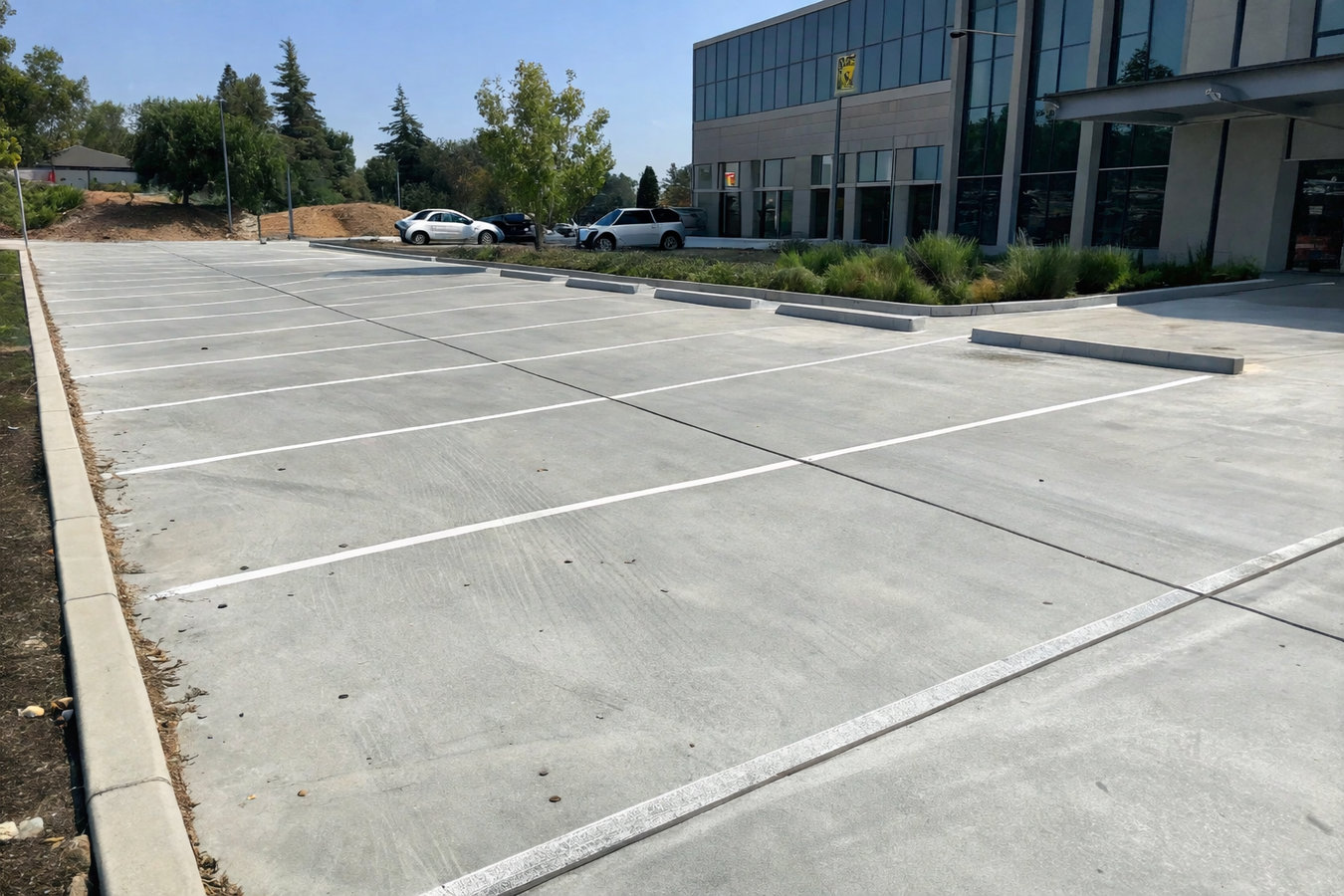
Cracked, crumbling pavement costs you every season. We build concrete parking lots in Hammond that handle freeze-thaw winters, clay soil, and heavy use without failing in a few years.
Concrete parking lot building in Hammond means removing your existing surface, grading the ground for drainage, compacting a stable gravel base, and pouring a reinforced concrete slab rated for your vehicle load - most residential and small commercial jobs take one to two weeks from demolition to a surface you can drive on.
Hammond property owners often reach this point after years of patching the same cracks, dealing with water that pools instead of draining, or watching a surface that was installed years ago fall apart winter by winter. Whether you need a private residential pad or a small commercial lot, the process is the same: proper base prep first, then a pour that is timed to the weather and built to code. If your current surface also involves adjacent concrete - like concrete driveway work - we can coordinate both projects so you are not dealing with two separate contractors and two separate timelines.
If you have patched the same cracks before and they reappear in the same spots, the problem is under the surface, not on it. In Hammond's freeze-thaw climate, cracks that are ignored grow quickly once winter arrives - water gets in, freezes, and widens the gap. At a certain point, patching stops being cost-effective.
Standing water on a parking surface means the lot was graded incorrectly or has settled unevenly. In Hammond, where spring rains are heavy and clay soil shifts seasonally, this problem gets worse each year. Pooling water accelerates surface damage, so what starts as a drainage issue becomes a structural one.
If the top layer is peeling off in chips or the edges are breaking apart, that is a sign of repeated salt exposure and freeze-thaw damage - both facts of life in Hammond winters. This kind of deterioration does not stop on its own. Once the surface layer is compromised, moisture reaches the slab and the damage accelerates.
Most asphalt surfaces installed in Hammond in the early 2000s are reaching the end of their useful life. If your surface looks faded, has multiple patched areas, and feels rough or uneven underfoot, full replacement with concrete may be more cost-effective than continuing to patch. A site visit will give you a clear read on which direction makes more sense.
Every concrete parking lot project starts with the ground underneath. We excavate to the required depth, remove soft or unstable soil, and compact a gravel base that gives the concrete a stable, consistent surface to sit on. Then we pour a slab to the thickness your vehicle load requires - standard passenger vehicles typically need four to six inches, while heavier commercial traffic calls for more. We cut control joints into the finished surface at regular intervals so the concrete can flex without cracking randomly. For projects with structural requirements - such as lots that connect to a building or require concrete footings - we handle both phases so the work is coordinated from the start.
We also handle the permit process through the City of Hammond Building Department. Pulling the permit and scheduling the required inspections is part of the standard job, not something we charge extra for. The city inspection that happens before the pour is a layer of protection for you - an independent check that the base depth and reinforcement meet code before anything is buried. Once the surface is cured and inspected, we walk the finished lot with you, point out the joint locations, and explain what maintenance to expect in the first year.
Best for homeowners adding off-street parking or replacing an aging driveway apron on a tight urban lot.
Suited for business owners, rental property managers, and multi-family property owners who need a durable, low-maintenance surface.
For properties with existing asphalt or deteriorated concrete that needs to be broken out and hauled away before the new slab is poured.
For lots where standing water or grading problems are the core issue - we re-grade during base prep so water drains correctly after the job.
Hammond sits in a climate zone where temperatures swing above and below freezing dozens of times each winter. Every time water enters a small crack and freezes, it expands and widens that crack - a process that destroys poorly built concrete surfaces within a few years. On top of that, Hammond roads are heavily salted during winter storms, and that salt gets tracked onto private surfaces by every vehicle that enters. A contractor who works in this market regularly will specify a mix and surface finish that resists both freeze-thaw damage and salt penetration from the start. Much of Hammond also sits on clay-heavy soil that expands when wet and contracts when dry, which puts stress on anything sitting on it. We excavate deeper and install a thicker gravel base than contractors might in sandier parts of Indiana - skipping that step is the most common reason local parking lots develop cracks and low spots within a few years of installation.
We serve the full Hammond area, including Portage and Griffith. If you are in one of Hammond's older industrial or residential neighborhoods where aging asphalt is common, we factor demolition and hauling costs into your written estimate so there are no surprises when the invoice arrives. Permits and inspections are standard practice for us - the City of Hammond requires them, and we handle that process on your behalf from start to finish.
We schedule a time to look at your property in person before giving you a price. We measure the area, check the existing surface, and assess drainage - you will receive a written estimate, typically within one business day of the visit.
We handle the permit application through the City of Hammond Building Department before any equipment arrives. This adds a week or two to the start date, but it protects you with an independent inspection record for the life of the property.
The existing surface is broken out and hauled away, typically in a single day for a residential lot. Then we grade the soil and compact a stable gravel base - this step determines how long the finished surface lasts.
The concrete is poured, finished with a textured surface, and control joints are cut in. Vehicles stay off for at least seven days. After the city's final inspection, we walk the finished lot with you and explain first-year maintenance.
Free on-site estimate. We handle the permit. No pressure, no obligation.
(219) 666-0040The City of Hammond requires a building permit for new paved surfaces, and we handle the application and inspection coordination as a standard part of every project. You get a documented record that the work passed city inspection - something that matters if you ever sell the property.
Hammond's clay-heavy soil expands and contracts with moisture, putting stress on concrete that is not properly supported. We excavate to the correct depth and compact a gravel base sized for local soil conditions - the step most early failures trace back to when it is rushed.
We work regularly in Hammond and Lake County, which means we understand the soil conditions, the frost depth requirements, and the permit process for this specific city. Every estimate is written and accounts for your site conditions - including demolition of any existing surface - so the final invoice matches what you were quoted.
Road salt is a reality in Hammond winters, and it is chemically hard on concrete. We use mix specifications and surface finishes that resist salt penetration, and we explain first-year sealing so your surface stays protected. For more on concrete durability in freeze-thaw climates, the American Concrete Pavement Association is a reliable resource.
Every parking lot we build in Hammond is backed by a written estimate, a permitted pour, and a walkthrough at completion. If something comes up after the job - a question about sealing, a concern about a joint - you have a local contractor you can call.
Structural footings poured to Hammond's 42-inch frost depth, required before any building or addition that connects to the lot.
Learn MoreResidential driveway slabs built for Hammond's freeze-thaw conditions, often paired with parking pad projects on the same property.
Learn MorePermit season fills up - lock in your start date before the best installation windows are gone.